When it comes to incorporating natural stone into your bathroom, the decision between travertine vs marble is common. Both materials have been used for centuries and are still popular today thanks to their timeless appeal, durability and ability to elevate a space. If you’re deciding between the warm, organic feel of travertine bathroom tiles and the refined, luxurious appeal of marble bathroom tiles, each stone offers its own unique benefits.
The right choice for your bathroom will ultimately depend on the design style, maintenance preference and how the stone will be used within the space. In this guide, we will compare travertine and marble across key considerations, including durability, maintenance, cost and design, to help you decide which stone is best suited to your bathroom.
Browse RMS Traders’ Travertine Collection and Marble Collection to discover a range of natural stone options suitable for bathroom applications.
Is Travertine suited to bathrooms?
Travertine is a good choice for bathroom applications; its popularity stems from its combination of natural beauty and practicality. Known for its neutral palette, warm tones, and textural variation, it has become a preferred choice in contemporary, Mediterranean, and organic-styled bathroom designs.
On the Mohs hardness scale, travertine ranks between 3 and 4, marking it as a moderately hard stone that can be scratched. Additionally, the naturally occurring pockets it is loved for make it a more porous stone that naturally absorbs liquids and stains. For this reason, it would require periodic sealing to maintain the natural character that makes it so appealing.
Many travertine products are available in finishes that offer slip resistance, making these a practical and aesthetic option for wet areas. RMS Traders’ products, such as Silver Travertine and Tuscan Travertine, are commonly specified for bathroom flooring, with high slip-resistance ratings and textured finishes suitable for bathroom environments.
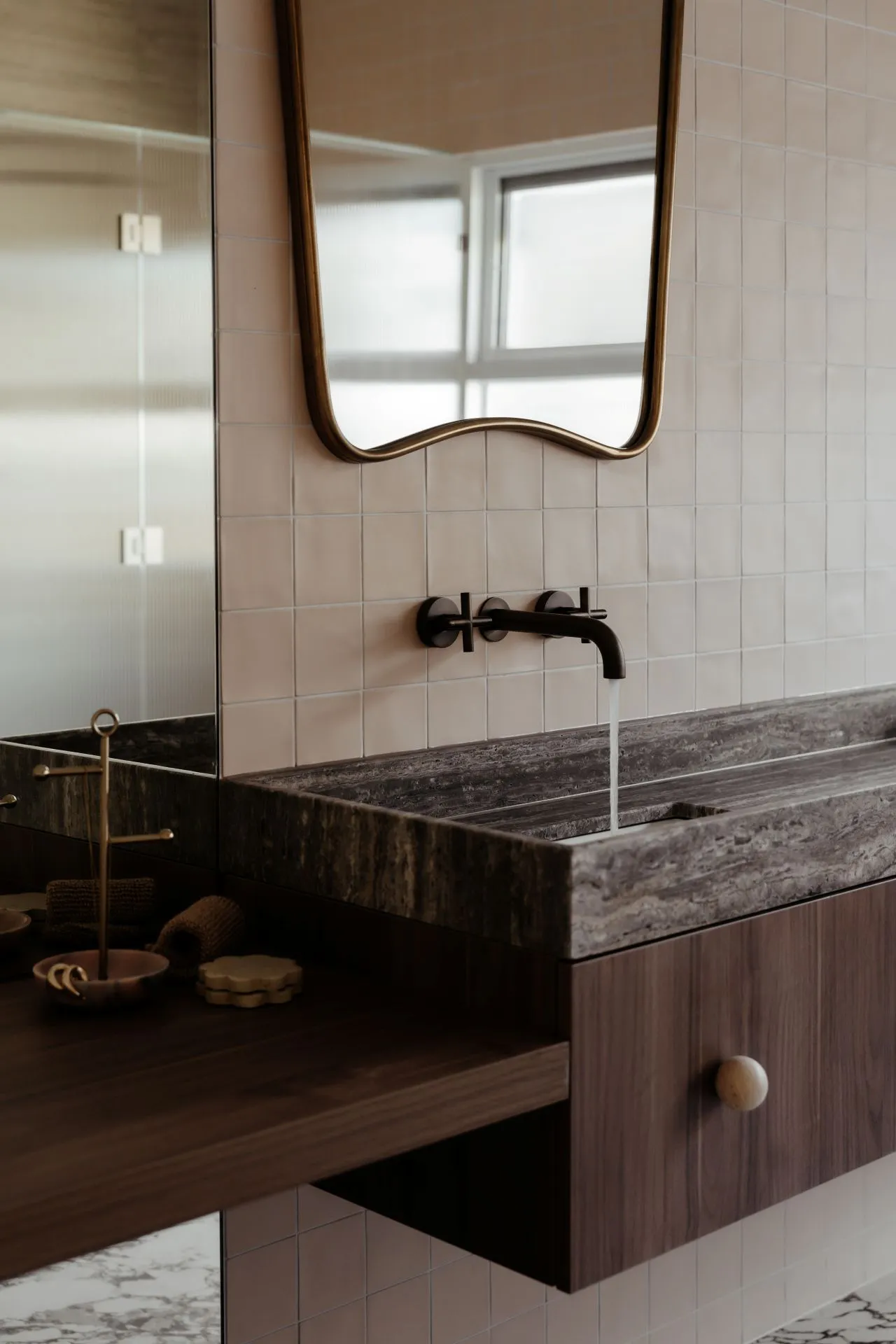
Travertine bathroom tiles are suited to bathroom floors, walls, shower niches, and vanities, and can be used across the space to create a cohesive design. A travertine bathroom floor is also a popular choice for adding warm, grounding texture underfoot while complementing a range of design styles.
Is Marble suited to bathrooms?
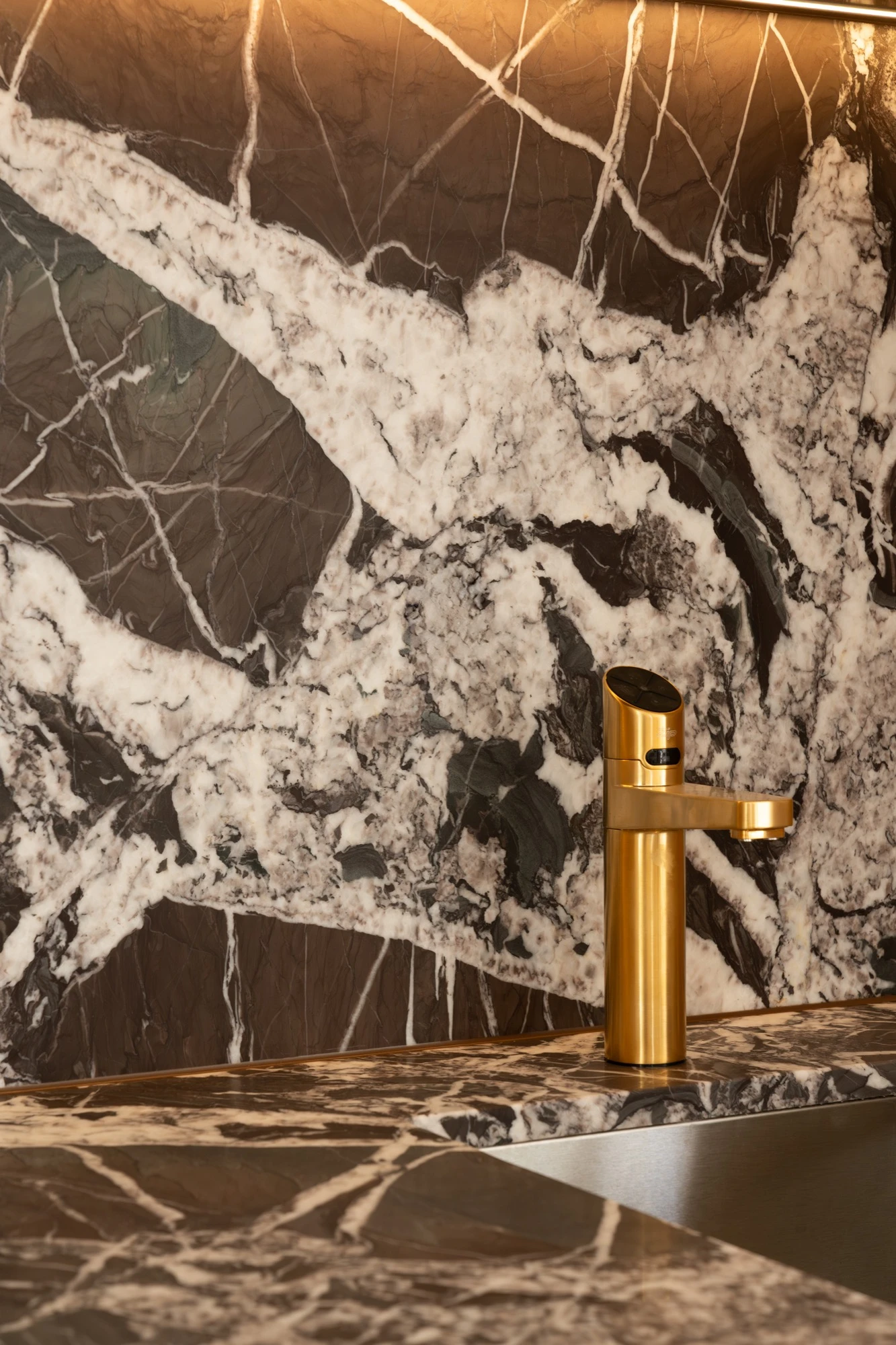
Marble has long been a favoured choice for luxury interiors and a sought-after material for bathroom design. Its distinctive veining, stunning natural variation and timeless elegance make it an excellent choice for building a sophisticated space.
It’s a versatile material, available in a wide range of colours, patterns and veining styles. Marble bathroom tiles can complement everything from minimalist interiors to statement designs.
Marble is typically rated between 3 and 5 on the Mohs hardness scale, depending on its mineral composition. While it is durable enough to be used within the bathroom, it is a softer material, so it can scratch or etch if it isn’t properly cared for.
Where marble can be used depends on the finish of the stone. While polished marble isn’t recommended for wet floor areas, as it can become a slip hazard, honed marble can be carefully considered for other flooring applications. Marble is well-suited to bathroom walls, vanities, feature elements, niches, and shower surrounds.
RMS Trader’s marble products, Bianco Carrara and Viola Split, are both popular for use within bathrooms. Each stone offers unique veining and a refined quality that suits modern bathroom design.
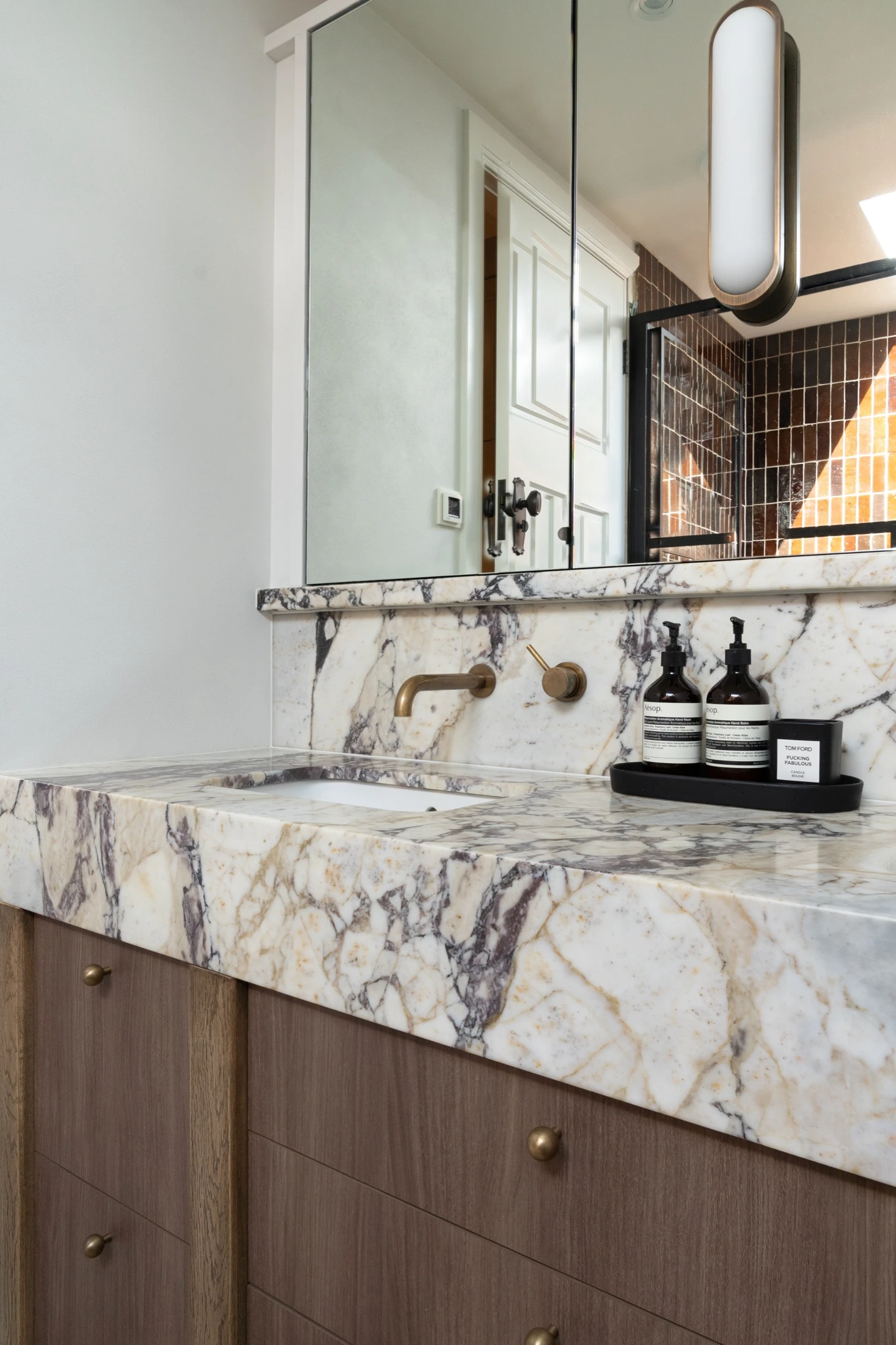
When the right finish is chosen and the stone is well maintained, marble offers a classic, high-end addition that elevates a bathroom design.
Need inspiration?
Visit our guide to Choosing the Best Marble for Your Home, to learn more about marble varieties, finishes and how to choose the right stone for your next project.
Travertine vs Marble cost, durability and maintenance
While both travertine and marble are great choices for interiors, there are practical differences that may help you decide which material is better suited to your bathroom renovation. Outlining the costs, durability and maintenance requirements of each stone can ensure that your selection aligns with your design goals and lifestyle.
Travertine vs Marble cost
The cost of each material can vary significantly when considering the stone’s origin, rarity, finish, size, and format. However, travertine is generally a more accessible natural stone option, while marble often has a higher price point. Installation costs are similar, as both materials need specialist handling and installation to achieve the best result.
Across the RMS Traders range, travertine prices vary, typically ranging from from $75m² to $165m², while marble generally ranges from $99m² to $350m² depending on the product and finish. Despite their price differences, both natural stones can add long-term value to a bathroom design through their durability and aesthetic appeal.
Travertine vs Marble Durability
Both travertine and marble are suited to bathroom applications, but they will perform slightly differently. As we saw previously, travertine has a Mohs hardness scale rating of around 3-4, while marble ranges between 3-5. They are therefore both moderately hard stones and susceptible to scratching and etching.
Though marble may offer slightly greater resistance to everyday wear, depending on the finish, it can be slippery and not suited to all bathroom applications. On the other hand, travertine’s naturally textured surface and honed finishes offer greater slip resistance when compared to marble. Overall, when properly cared for, both can perform beautifully for decades in bathroom settings.
Travertine vs Marble Maintenance
Travertine and marble have similar maintenance requirements. Both will need regular maintenance and care to keep them looking their best. When it comes to cleaning, pH-neutral, stone-safe products are essential; acidic products should not be used. Each stone should also have liquid spills cleaned immediately and dried thoroughly to remove water sitting on the stone.
As they are both porous materials, they require regular sealing with a deep-penetrating sealant to protect against stains and moisture. How often they require sealing depends on a few factors, such as the stone type, finish, quality of the sealant, how frequently the area is used, and how exposed it is to water and other cleaning products. As a general guide, Travertine used in high-traffic areas may require sealing every 1 to 2 years, and marble may require resealing every 6 to 12 months.
Travertine vs Marble at a glance
| Consideration | Travertine | Marble |
| Appearance | Warm, earthy, organic | Elegant, refined, luxurious |
| Hardness (Mohs scale) | 3 – 4 | 3 – 5 |
| Slip Resistance | Often better due to textured finish | Depends heavily on finish |
| Cost | $75m² to $165m² | $99m² to $350m² |
| Sealing | Every 1 – 2 years | Every 6 – 12 months |
| Best applications | Bathroom floors, walls, shower niches, and vanities | Bathroom walls, vanities, feature elements, niches, and shower surrounds. |
| Best Design styles | Mediterranean, organic, spa, coastal | Contemporary, luxury, classic |
While each stone performs well in a bathroom environment, seeing them in a completed project can help visualise the final result.
Explore RMS Traders Surrey Hills project to see how travertine creates warmth and texture through a custom vanity.
See how marble creates a bold yet timeless bathroom in the Avoca Townhouse project.
How to choose between Travertine and Marble
So travertine vs marble? The decision will come down to your priorities and design style. The cost of the stones and how you want to use them within the space will also determine suitability. If your preference is lower cost, a warmer, organic aesthetic, or bathroom flooring, travertine is an excellent choice. If it’s a classic, timeless style where cost isn’t a key factor, then marble may be better suited. Both materials offer lasting beauty and exceptional performance, making either a worthwhile investment when selected for your bathroom renovation.
Ready to take the next step and choose your natural stone? Explore RMS Traders’ premium marble collection and travertine collection, or visit one of our showrooms to see the beauty of each stone for yourself.
Can you suggest a cohesive marble bathroom design using standard sizes and widely available fixtures and fittings?
A cohesive marble bathroom design allows the natural stone to become the focal point. Whether it’s used on floors, walls, vanity or as a feature element, marble works best when paired with simple fixtures, clean lines and a restrained colour palette. Fixture finishes like brushed nickel, chrome or matte black complement the stone without pulling focus. RMS Traders’ projects, such as Avoca Townhouse, show how marble can be used consistently in a bathroom space to create a refined, high-end design that feels effortlessly luxurious.
What should I consider when choosing a travertine basin or vanity for my bathroom?
When choosing travertine bathroom basins or vanities, it’s important to consider the bathroom’s overall style and the character of the natural stone. Travertine comes in a range of colours, most commonly from warm beiges and silvers, as well as a variety of cuts and finishes. Vein-cut travertine showcases the stone’s distinctive linear patterning and can create a striking focal point in a bathroom.
Due to its natural colour variations and earthy tones, it is suited to a range of design styles, particularly contemporary, Mediterranean, or organic-style bathrooms. As seen in RMS Traders’ Surrey Hills project, a vein-cut travertine vanity can add warmth, visual texture, and interest, creating a bathroom that is timeless and inviting.
Which marble colours and finishes work best for a contemporary bathroom and how do I maintain them?
Marbles with soft white, grey or beige bases are popular choices for contemporary bathrooms as they offer a clean and timeless aesthetic. In these spaces, honed finishes are often preferred as they provide a smooth, matte appearance that complements modern design.
Marble requires regular upkeep to maintain its appearance. Clean marble surfaces with a pH-neutral stone-safe cleaner and avoid acidic products. As marble is a naturally porous stone, it should also be sealed with a compatible sealant every 6 – 12 months to protect the stone from moisture and staining.