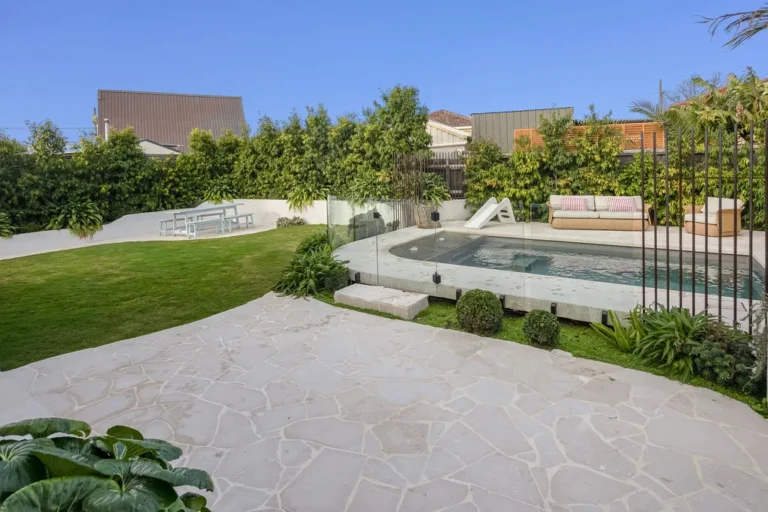

While the differences between pool coping profiles are subtle, each forms a distinct look at the water’s edge. The coping you choose can influence the finished look and feel of your pool. From the clean lines that a square edge brings to the rounded finish of bullnose or the thicker, more substantial appearance of drop face coping, each profile offers a unique appeal.
The choice, however, isn’t purely aesthetic. The profile you choose must suit the pool design and fit against the pool structure. In this guide, we’ll take a closer look at the main types of pool coping and compare their differences, sharing useful details worth considering when choosing the right profile for your pool.
If you’re new to pool coping, start with our Guide to What Is Pool Coping.
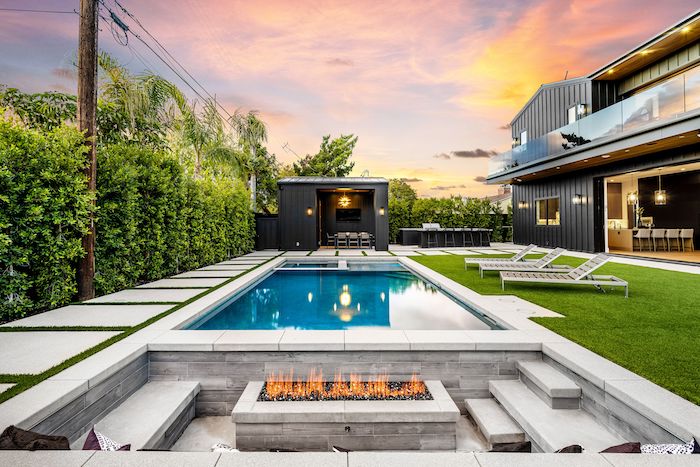
What is a pool coping profile?
A pool coping profile is the specific shape and finished edge of the stone material that encircles the pool rim. The surface finish describes how the stone has been treated, whether it has been honed, sandblasted, tumbled, etc., and the profile refers to the shape of the coping’s exposed edge.
The shape of the exposed edge affects the finished appearance of the coping. For instance, a straight edge can create a clean, modern finish, while rounded or rebated edges can soften the look or make the stone appear larger.
Selecting which profile to use for your pool therefore involves more than choosing your preferred look. It also needs to suit the pool design, structure and dimensions of the coping used. The most common pool coping edge profiles are square edge, bullnose, and rebated (also known as drop face), each of which creates a distinct finish around the pool.
Main pool coping profiles
There are 3 main types of pool coping: square edge, bullnose, and rebated. Each differs in how its exposed edge is shaped and how it sits against the pool. Let’s take a closer look at each and what sets them apart.
Square edge pool coping
Square edge coping features a straight, 90-degree flat edge that creates a clean, modern look around the pool’s perimeter. Without a rounded or extended face, the thickness of the stone is visible at the edge.
Its streamlined appearance and 90-degree angles make this type of coping best suited to rectangular, geometric pools, architectural and lap-style pools. Square edge coping pairs well with modern outdoor layouts, with the finished result depending on the stone chosen, texture and thickness.
RMS Traders offer a range of square edge coping in a variety of natural stones and sizes. Our Premium Bluestone Pool Coping comes in a few different profiles.
While the profile itself is straightforward, square-edge pool coping shouldn’t be substituted with a standard square-edged tile. Pool coping is made, sized and finished specifically for its function and installation in a wet area along the pool’s rim.
Bullnose pool coping
Bullnose coping is characterised by its smooth, rounded exposed edges. Rather than a squared-off edge, the stone curves from the surface to the pool for a softer transition between horizontal and vertical faces.
Among the different pool coping profiles, bullnose offers a less angular alternative to the crisp lines of a square edge or the more substantial look of drop face coping. While it has been used in traditional-style pools, the overall design depends heavily on the stone, colour, and surrounding landscaping, allowing bullnose coping to suit a contemporary outdoor design.
Due to its rounded edges, it can also offer a more comfortable grip and sitting experience around the pool’s rim. Bullnose pool coping suits family pools, freeform or curved pool designs, and traditional or resort-style outdoor spaces. While the curved edge does remove sharp corners, the profile itself shouldn’t be used as a measure of overall poolside safety. Instead, consider the stone, finish, and slip-resistance ratings.
Rebated or drop face pool coping
What is drop face pool coping? This profile has an L-shaped extended edge that drops at a 90-degree angle over the pool’s perimeter. From the side, it conceals the pool shell or joins beneath the coping.
Visually, this coping differs by the added thickness the shape creates. Where square edge and bullnose profiles show the actual thickness of the stone, drop face pool coping extends further down, giving the appearance of a much more substantial stone. This provides a high-end visual effect without the weight and cost of large stone blocks. Drop face pool coping suits architectural, concrete, geometric, and some fibreglass pools.
As the rebate extends over the pool edge, its dimensions need to be considered early in the design process. This is especially important for new pool builds where the coping profile should be decided alongside the pool shell to ensure they are a suitable fit.
RMS Traders offers a range of rebated coping, including the beautiful Tundra Light Sandblasted Pool Coping, which creates a thick, substantial-looking pool edge through its drop-face profile.
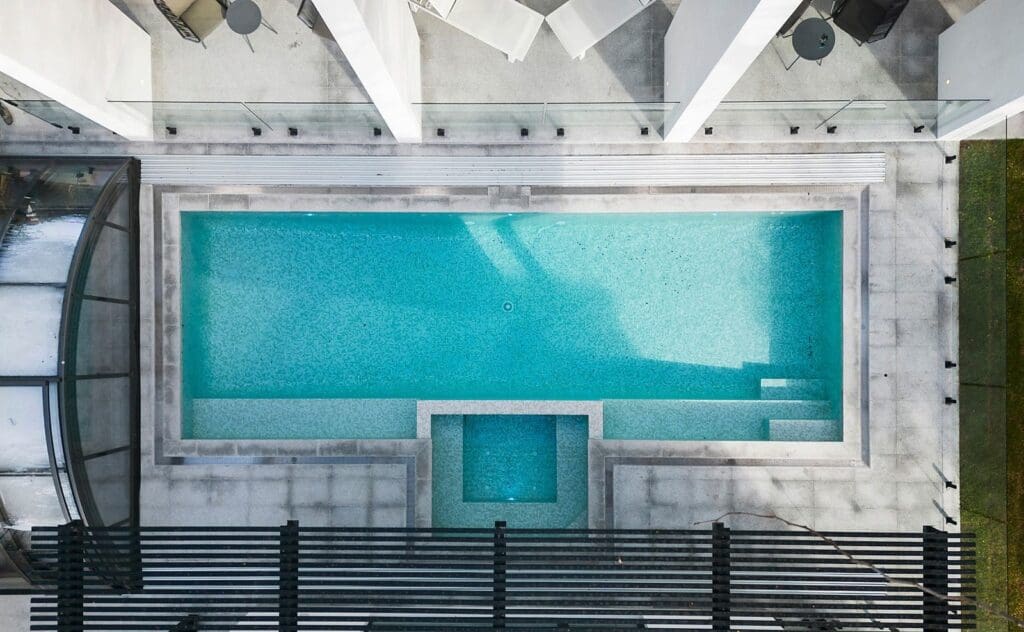
Bullnose vs drop face vs square edge coping
When comparing bullnose vs drop face coping and square edge options, the most notable differences are the shapes of the exposed edge and how the coping sits against the pool shell. Here are the key differences of each profile:
| Profile | Edge shape | Appearance | Key consideration |
| Square edge | Straight | Defined, angular finish with the stone’s actual thickness visible | The stone’s actual thickness is visible, so thickness and finish impact the final look |
| Bullnose | Rounded | Softer, curved perimeter with less pronounced corners | The rounded edge can be comfortable for gripping and sitting. |
| Rebated/drop face | L-shaped with a vertical return | Creates the appearance of a thicker, more substantial stone | The rebate must suit the pool shell and should be planned in the design process |
Not every pool coping profile will suit every project. The right choice depends on the pool’s construction, the style you want to achieve, and how the coping suits the surrounding materials.
Pool coping thickness explained
If you’re comparing the different profiles, pool coping thickness is another detail to consider. The stone thickness affects how the exposed edge appears, but with rebated coping, the visible face isn’t the same thickness as the rest of the paver.
Square-edge and bullnose coping show the thickness of the stone, but rebated coping creates the appearance of added thickness through the extended front edge. This gives the pool perimeter the look of substantial stone pieces without requiring the same thickness across the entire coping.
60/30 pool coping
When browsing through rebated coping, you may have come across 60/30mm measurements, but what does 60/30 coping mean?
Let’s break it down: the first measurement is the total height of the visible front face (60mm), and the second is the thickness of the main horizontal stone (30mm). Here, the rebate extends an additional 30mm below the stone, which creates the appearance of a thicker pool edge.
RMS Traders offer rebated coping in several formats, including 600 × 400 × 50/20mm, 600 × 400 × 50/30mm and 600 × 400 × 60/30mm. These measurements show the size of the visible front face and the thickness of the main stone surface, allowing you to compare formats before selecting one for your project.
Having an understanding of these measurements is important when selecting rebated coping, as the dimensions need to work with the pool shell and surrounding paving. We recommend checking the individual product specifications before placing an order.
How to choose the right pool coping profile
To choose the right pool coping profile, you will need to balance the appearance you want with the practical requirements of your project.
Consider your pool design
The construction and shape of your pool can determine which profiles are suitable. Concrete and fibreglass pools have different edge specifications, while curved or freeform designs might require custom-cut coping. It’s also important to consider whether you’re building new or renovating an existing pool, as this may affect which options suit the project.
Think about the finished look
Each unique profile delivers a different visual effect. Square edge offers a defined, angular finish; bullnose provides a gentler curve; and drop face creates the appearance of thicker stone. Consider how your chosen profile will complement the pool’s shape, surrounding paving and the outdoor space’s design.
How will the edge be used?
How will people interact with the pool perimeter? If the edge is used for sitting, holding onto, or entering and exiting, the shape of the coping is worth bearing in mind. The stone’s finish and slip-resistance rating should be considered separately from its profile.
Plan your pool coping early
The coping profile should ideally be chosen alongside the pool shell and surrounding finish being decided. This is important for rebated coping where the edge needs to fit the pool structure. Planning can help avoid compatibility issues during installation.
For further information on preparation and installation, see our Guide to Installing Tiles.
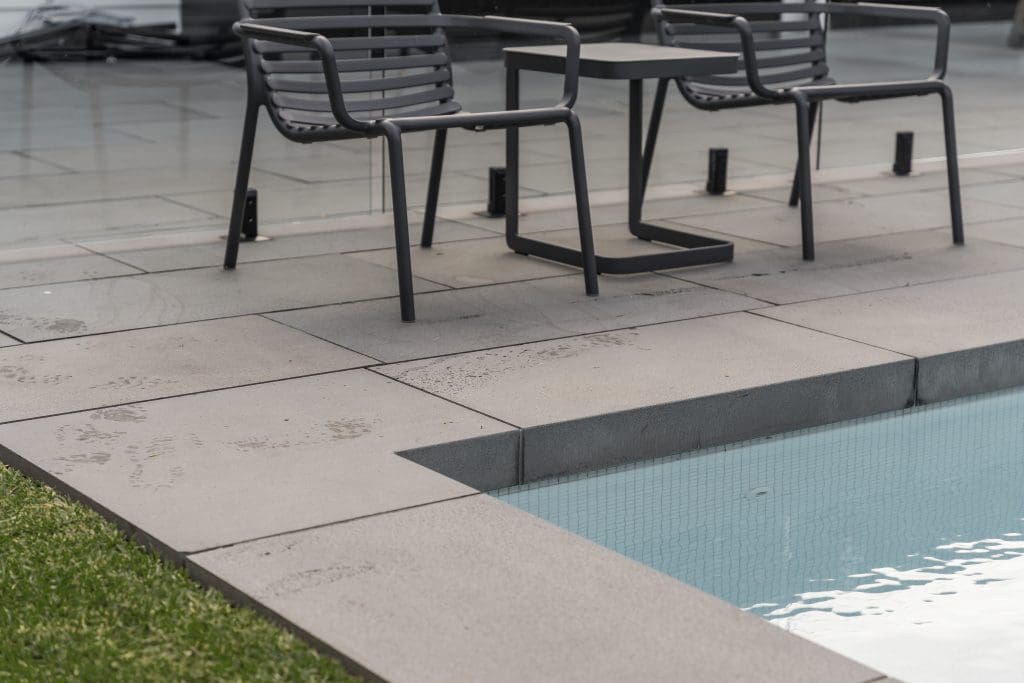
Matching coping with the surrounding pool area
Choosing pool coping and surrounding paving that complement each other is an important part of the overall design. Using the same natural stone across both can create a seamless finish, while complementary materials can introduce a subtle contrast in colour or texture at the pool’s edge.
The coping profile also impacts how these surfaces meet. For instance, a square edge provides a more understated transition, while profiles create a more defined border around the pool. When choosing natural stone, we recommend ordering coping and paving together where possible, as colour and tonal variation can occur between batches.
Clever design considers smaller details that add to the finished space. RMS Traders supplies Skimmer Lids and Drain Covers that your installer can finish, helping these functional elements blend into the surrounding paving.
Check the product specifications
While selecting your preferred style of coping matters, the profile alone won’t tell you everything you need to know about a product’s suitability. That’s where the product specifications come in handy. Check the dimensions, stone thickness, surface finish and slip-resistance rating, to ensure the coping suits not only your pool design but the installation requirements.
Slip resistance is an important factor, especially for areas like the pool that are regularly exposed to water. A stone’s finish can impact slip resistance but it won’t determine its safety slip rating. Check the relevant product information and available slip ratings rather than relying on appearance or texture.
Explore the RMS Traders Product Specifications or speak with the team for guidance on a specific product.
Find the right pool coping profile
The right coping profile suits your practical requirements as well as the finish you want to achieve. From square edge and bullnose to rebated or drop face, you can find the right pool coping profile at RMS Traders. Explore our Pool Coping range online, order a sample, or visit our Richmond, Hoppers Crossing, or Geelong showrooms.
Which pool coping profile is the safest?
No coping profile is universally safest for every pool. While the rounded edge of bullnose coping removes sharp edges and may be more comfortable to sit on or hold, poolside safety also depends on the finish of the stone, tested slip-resistance rating, and correct installation. Review the individual product specifications before making your selection.
Can I use drop face coping on an existing pool?
Yes, drop face coping may be compatible with an existing pool, but this will depend on the structure, edge dimensions, surrounding surfaces, and whether you’re installing over existing pavers. As the rebate will extend over the pool edge, it’s best to have the area assessed before ordering coping to ensure it’s a suitable fit, as some projects may also require custom-cut stone.
What is the difference between drop face and rebated coping?
Drop face and rebated coping are often used interchangeably to describe coping with an L-shape or extended vertical edge. This profile type conceals the pool shell beneath and creates the appearance of thicker stone.